The Independent Uganda: You get the Truth we Pay the Price


China-Uganda ties are moving beyond infrastructure, raising questions over who captures the value
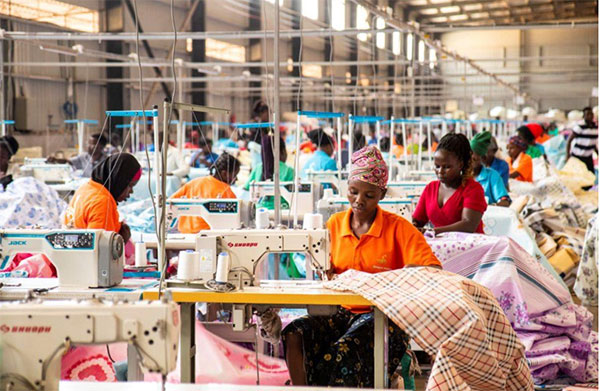
Kampala, Uganda | IAN KATUSIIME | Mariam, a woman in her late twenties, works at Nice Textiles Uganda Limited inside the Sino-Uganda Mbale Industrial Park. Her work begins with thread and ends with fabric.
“Here, we make fabrics that go through different processes,” she says.
First, threads are knitted into fabric. Then comes cleaning, followed by printing, colouring and the application of different designs. The factory produces African wax prints — ebitengye — as well as bedsheets, bedcovers and other textile products.
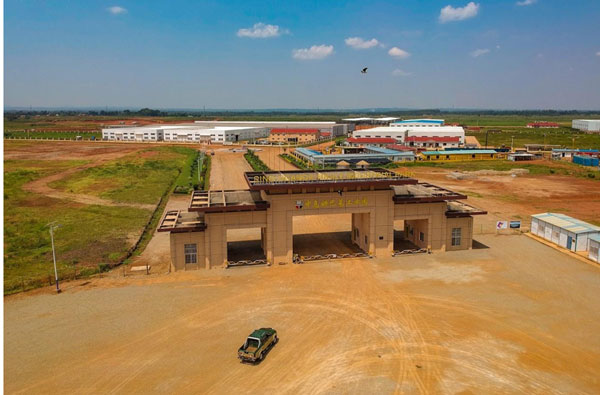
Nice Textiles is one of dozens of companies operating inside the sprawling industrial park. Tian Tang Group, a Chinese manufacturer, has established 50 factories across the 619-acre site.
According to a Chinese official, the park now produces more than 150 products, ranging from steel bars, diapers and clothing to refrigerators, television sets, mobile phones and furniture.
By 2025, the park employed about 11,000 Ugandans. For years, China’s relationship with Uganda was most visible in the country’s roads, dams and other large infrastructure projects. In Mbale, that relationship looks different. It looks like a factory floor.
And that may offer a glimpse of the next chapter of China’s engagement with Uganda: less about building infrastructure for the country, and increasingly about embedding Chinese capital, technology and supply chains inside Uganda’s own industrialisation ambitions.
The shift is reflected in the language coming from Beijing. Wu Guangrong, China’s new ambassador to Uganda, who arrived in Kampala in August, has spoken of advancing a “shared pursuit of modernization” between the two countries and ensuring that the benefits of development reach both peoples.
At a meeting with Prime Minister Robinah Nabbanja on August 26, Wu pointed specifically to China’s zero-tariff policy for African products, saying it was already producing visible results in boosting Uganda’s exports to China.
Wu has also already visited the Confucius Institute at Makerere and spoken about education, talent development and China’s modernisation experience.
The emphasis is revealing. The next phase of the China-Uganda relationship is not simply about what China can build in Uganda. It is increasingly about what Uganda can produce, export and integrate into a much larger Chinese economic ecosystem.
China and Uganda have maintained diplomatic relations since 1962. For much of that history, the relationship was defined by infrastructure, state-to-state diplomacy, concessional financing, military cooperation and political solidarity.
But the economic relationship is changing. It is now defined by factories, exports, Chinese market, technology, training, digital infrastructure, Chinese businesses and Ugandan entrepreneurs plus geopolitics.
The China-Uganda Liaoshen Industrial Park in Nakaseke District, about 67 kilometres from Kampala, offers another window into the development. Also known as Kapeeka Industrial Park, the complex is home to 35 factories, with Goodwill Ceramic Tiles among its largest manufacturers.
Goodwill produces over 40,000 square metres of ceramic floor tiles and employs more than 1,200 people. Crucially, much of its raw material is sourced locally, tying the factory to Ugandan suppliers and creating linkages beyond its gates.
About 20 truckloads of tiles leave the factory each day, destined for markets in Kenya, Tanzania, South Sudan and the Democratic Republic of Congo.
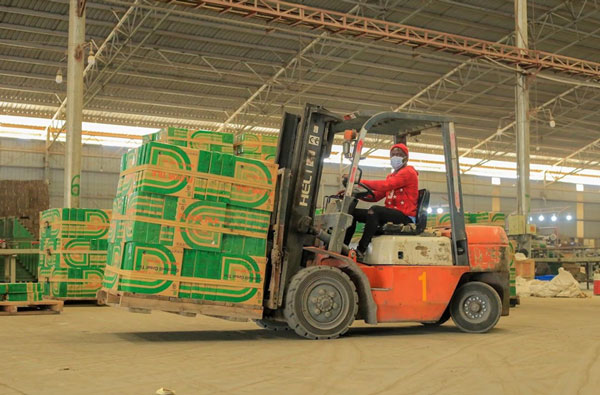
Nearby, Venus Industries assembles a range of electrical products, including LED bulbs, tube and street lights, extension cables, fans and calculators, for the Ugandan and regional markets. Its workforce of about 600 includes engineers, technicians and other workers.
But the factories’ significance extends beyond the products rolling off their production lines. Workers are being trained in assembly, wiring, soldering, quality control, packaging and logistics — skills that can outlive any single factory or product.
If Mbale shows how Chinese companies are plugging Uganda into manufacturing supply chains, Kapeeka offers another piece of the picture: the attempt to build an industrial ecosystem in which capital, production, local suppliers, workers and regional markets are connected.
The vision of Paul Zhang
Chinese investor Paul Zhang offers another window into the changing character of China’s economic relationship with Uganda.
Zhang, the lead developer of Sino-Uganda Mbale Industrial Park and proprietor of the Tian Tang Group, is now seeking to expand his industrial footprint beyond Mbale and Mukono. He developed Mbalala Industrial Park in Mukono, where companies including CCLE manufacture motorcycle tyres and tubes, and is preparing to establish another industrial park in Kayunga District.
In April, Zhang met Evelyn Anite, then Uganda’s Minister of State for Investment. Anite said President Yoweri Museveni had offered Zhang 1,200 acres of land for the proposed development.
Zhang’s interests extend well beyond manufacturing. His business empire spans hospitality, real estate, construction and mineral development, making him less a traditional factory owner than an example of the increasingly diverse Chinese commercial presence in Uganda.
His interests have also reached some of Uganda’s most ambitious redevelopment proposals. Zhang was reportedly involved in a proposal to Museveni to redevelop Luzira Prison into a five-star hotel.
From industrial parks to hotels, property and minerals, Zhang illustrates how the new China in Uganda is increasingly being built not only through state projects, but through private capital spreading across multiple sectors of the economy.
Zhang’s pitch for Uganda is rooted in China’s own transformation.
“When I was young, over 40 years ago, China was as poor as Uganda and had no industries,” he told UG Bulletin. “Our government invited foreign businesses to invest, and now, China is the second-largest economy in the world behind the USA.”
He believes Uganda can follow a similar trajectory. “With its vast resources and industrious population,” Zhang said, Uganda could achieve comparable growth and become Africa’s third-largest economy within a decade.
His confidence is partly rooted in geography. Uganda, he argues, is not simply a domestic market but a manufacturing base for a region whose industrial capacity remains limited.
“South Sudan and eastern DRC lack industries and rely on Ugandan factories,” he said. “This gives Uganda a big market to tap into, not just locally, but regionally as well.”
That calculation helps explain Zhang’s continued expansion in Uganda. His industrial parks are designed not only to supply Ugandan consumers, but to plug factories here into the markets of South Sudan, the DRC, Rwanda, Kenya and Tanzania.
The bet is straightforward: Uganda’s value to Chinese investors is in the markets that surround it.
Zhang’s ambitions are part of a much larger Chinese investment footprint. According to Uganda Investment Authority data, Chinese investors account for 27.5% of companies operating in the country’s industrial parks, second only to Ugandan investors.
Chinese investment in Uganda is estimated at about $1 billion, spread across manufacturing, agriculture, oil and gas, infrastructure and industrial-park development.
UIA told Parliament’s Finance Committee that by June 2025, Uganda’s FDI stock had risen to US$3.5 billion, while 10 industrial parks were operational and industrial parks had generated 162,183 direct jobs.
China as a market
But investment is only one side of Uganda’s China strategy. Uganda also wants China to buy what Uganda produces — particularly coffee and other agricultural products.
In April, Uganda hosted a high-level delegation of Chinese investors for the China-Uganda Coffee Investment and Destination Tour, organised by Uganda’s embassy in Beijing together with the Ugandan Consulate in Guangzhou.
The delegation brought together companies from manufacturing, agriculture, tourism, construction and international trade, including Shandong Huajian Aluminum Group, Beijing Liujian Group, Wuxi Jiangnan Cable and Beijing Jubangbang Agriculture.
The tour was designed to deepen not only investment, but the trade and market linkages between the two countries. The message from Kampala was clear: Chinese capital should not simply build factories in Uganda; China should also become a market for what those factories and Uganda’s farms produce.
China’s zero-tariff policy for eligible products from African countries has become an important part of that pitch. Chinese officials say the policy is already helping expand bilateral trade and have encouraged Uganda to use the opportunity to increase exports.
That ambition was on display again in July, when Vice President Jessica Alupo visited the China-Uganda Agricultural Cooperation Industrial Park in Luweero. The park was conceived around commercial farming, agro-processing, technology transfer and export-oriented manufacturing, but is now being repositioned as a broader industrial complex.
Accompanied by Ugandan ministers, Chinese Embassy Counsellor Wang Jianxun and the Food and Agriculture Organization’s representative in Uganda, Alupo met enterprises operating in the park as the government considered how to move it into its next phase.
Wang said China’s implementation of the zero-tariff policy had significantly boosted bilateral trade and reaffirmed Beijing’s willingness to deepen economic, trade and investment cooperation with Uganda, particularly in agro-industrialisation and manufacturing.
The emerging bargain is therefore bigger than investment alone. Uganda wants Chinese companies to bring capital, technology and manufacturing capacity — while opening the door for Ugandan coffee, agricultural products and eventually manufactured goods to enter the world’s second-largest economy.
Uganda’s goal is to produce enough, at the right quality and scale, to walk through that door.
The new China in Uganda is not confined to factories and industrial parks. It is increasingly embedded in the systems that make an economy work — technology, industrial machinery, telecommunications, logistics, supply chains, agricultural technology and digital infrastructure.
Uganda’s own diplomatic strategy reflects this shift. The country’s Guangzhou consulate, in its 2026/27 policy statement, identifies economic and commercial diplomacy, inward investment, export promotion, technology transfer and public diplomacy as strategic priorities.
Its investment outreach targets sectors including clean energy, medical and pharmaceutical manufacturing, mining and minerals processing.
The Chinese reach is already visible across these sectors. Huawei is a major supplier of telecommunications equipment in Uganda while Chinese companies and investors are involved in industrial machinery, solar technology, electric vehicles, medical devices, pharmaceutical manufacturing, mining technology and other digital systems.
Technology transfer
But technology transfer is not only happening inside companies. It is also reaching farmers. In 2024, Sarah Nabirye travelled to China for a three-week programme in agro-enterprise and rural innovation at China Agricultural University in Beijing.
She was among 15 Ugandans selected for the programme. Back home in Jinja, she grows soybeans and chilli on a two-acre farm.
The training exposed the farmers to a very different agricultural system. They learnt about online marketing, planting in rows to improve yields and mechanised farming techniques.
“We moved to different provinces and we saw how China used agriculture to shift from poverty,” Nabirye told CGTN.
The programme was a partnership between the Busoga Consortium for Development and China Agricultural University, with funding from Tencent Holdings.
It is a small example of a much larger idea behind the new China-Uganda relationship: Chinese engagement is no longer simply about building something for Uganda. Increasingly, it is about transferring the machinery, technology, skills and commercial networks through which Uganda hopes to build something of its own.
For China, Uganda is a market of 45 million people, a gateway into the wider East African market and a country with the land, labour, natural resources and strategic location needed to support a more commercially integrated relationship.
Analysts say that China helping Uganda build industrial capacity serves two interests at once: supporting Uganda’s development while creating markets, supply chains and commercial opportunities for Chinese companies. It explains the shift from roads and dams towards factories, technology, skills and production.
Uganda wants jobs, industrialisation, export markets, foreign capital, manufacturing and agricultural transformation. But there’s a major debate on how much local value is created by Chinese investment.
Critics say a factory can create jobs without creating much of an industrial value chain if the machinery, components, technology and even key inputs continue to come from abroad.
One question looms large over the relationship: Is Uganda becoming part of China’s manufacturing ecosystem—or merely one of its markets?