The Independent Uganda: You get the Truth we Pay the Price


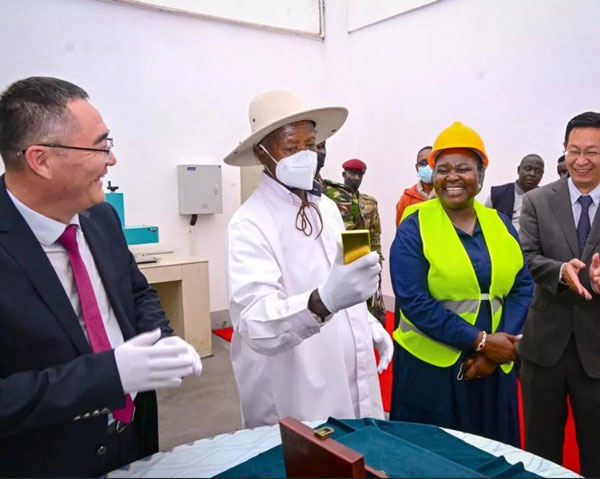
For policymakers, the clock is ticking on a choice between continuing an expensive experiment or rewriting the rules of Uganda’s mineral wealth
Kampala, Uganda | RONALD MUSOKE | For years, Uganda’s decision to give gold special treatment in its tax regime has been defended as an investment incentive. The idea was straightforward: make it cheaper to invest in an expensive industry, attract gold refineries and encourage more value to be added locally.
But at a recent mining revenue forum in Kampala, a more uncomfortable question was raised. If Uganda now has functioning gold refineries, what is the country still giving up by keeping the incentive?
That question dominated a forum convened by Oxfam-Uganda, SEATINI and UGEITI on September 1, which brought together researchers, civil society groups, mining executives and officials involved in the administration of Uganda’s mineral sector.
The debate was not simply about whether gold should be taxed; it was about what Uganda expects from its mineral wealth. Should the priority be attracting investment, raising government revenue or building an industry that creates jobs and keeps more value inside the country? And, ultimately, are Ugandans getting a fair return from the minerals beneath their soil?
The original bargain
Francis Shanty Odokorach, Oxfam’s Country Director in Uganda, believes the time has come to reconsider the policy. “We (need to ) ask the government to reconsider its decision,” he said, referring to the 2017 decision to zero-rate gold, which effectively removed royalties on the mineral.
He said, for Oxfam, the issue is no longer simply how much gold Uganda exports, but how much value the country retains from its mineral wealth. “Are we capturing the full public value of our mineral wealth?” Odokorach asked. He argued that Uganda must look beyond extraction and export figures to consider the value of minerals, the share retained domestically, how benefits are distributed and whether mining communities experience meaningful improvements in their lives.
Gold, he said, deserves particular attention because of its high value and revenue potential. “As Uganda works towards a fair and predictable fiscal arrangement for our mineral wealth, the government should reconsider reinstating its gold royalties to ensure Ugandans receive an appropriate return from their mineral wealth,” he said.
The argument, which seems more difficult for government to dismiss, is owed to the fact Uganda now has functioning gold refineries. Odokorach said at least three were operating, raising the question of whether the original justification for the incentive had already been substantially achieved. “We think it is time for His Excellency (Yoweri Museveni) to reconsider the decision for not charging royalties on gold,” he said.
The bargain behind the waiver
The strongest defence of the original policy, and, ironically, one of the arguments for reviewing it now, came from veteran mining-sector practitioner Zachary Baguma, who said he had spent more than 35 years in the industry.
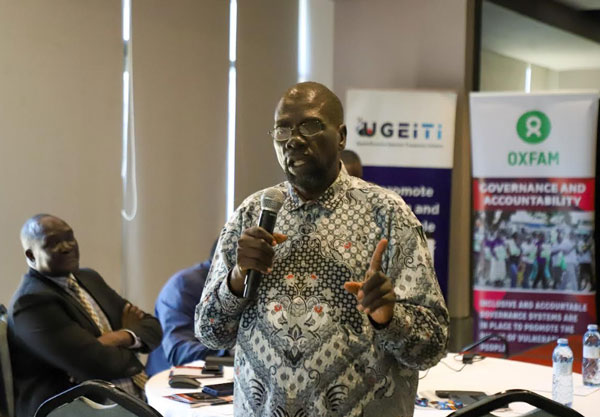
Baguma, a former commissioner at the Directorate of Geological Survey and Mines (now Mineral Development Programme in the Ministry of Energy and Mineral Development) recalled personally challenging President Yoweri Museveni over the decision.
“You’re putting gold on zero rate. How are you going to deal with dstricts that depend on royalties?” he recalled asking President Museveni. According to Baguma, the President’s response then was that Uganda needed to attract investment in gold refining and encourage value addition. “He said, we have to attract investment in the gold refining, to add value on the gold,” Baguma recalled Museveni as saying.. “When we achieve that, we can go back to the drawing board.”
Now, Baguma says, that moment may have arrived. Uganda, he said, had once been believed to have more than 10 refineries, although many did not meet the technical standards of facilities capable of producing gold at the required purity. After stricter enforcement, he said, only three remained.
“If we now have enough refineries and they are refining the gold, can we repeal the zero-rating policy and start charging royalties as provided for by law?” he asked. Baguma went further, urging forum participants to put the demand in writing and send it through the Ministry of Energy and Mineral Development to the President. “What he did, he has achieved. Now it is us to put it in writing to him why we are losing revenue and what we want him to do to remove the zero rating,” he said.
‘It is now the right time’
Jane Nalunga, the Executive Director of the Southern and Eastern Africa Trade Information and Negotiations Institute, a Kampala-based trade policy thinktank, broadly agrees. She accepts that mining and processing require significant investment and that high taxes can discourage investors.
But circumstances have changed, she says. “Where we are now, we have the refineries, they are established,” Nalunga said. “I think that zero rating and the taxation (around gold) should be re-evaluated so that we can be able to get the true value of the gold.”
Asked whether the time had come, she replied: “I think so, it’s the right time to do it.” Nalunga’s position was not necessarily an argument against incentives altogether. Rather, she argued that incentives should be reassessed as circumstances change. The larger objective, she said, should be industrialisation. “We need to industrialise,” she said, warning against a model in which Uganda simply extracts minerals and exports them.
The numbers behind the debate
Uganda’s mineral wealth makes the question increasingly difficult to ignore. The country has 27 mineral types in commercially valuable quantities, according to economist and lead researcher Dr Stephen Mayende, whose study, The Revenue Potential of Uganda’s Mining Sector, examined the sector between 2019/20 and 2023/24.
The resources include gold, iron ore, copper, cobalt, limestone, phosphate, graphite and uranium. Yet the sector’s contribution to government revenue remains relatively small. The Oxfam report says government mining revenue increased from Shs13.2 billion in 2019/20 to about Shs78.1 billion in 2023/24; a substantial rise but still modest against Uganda’s wider revenue needs.
Gold presents the sharpest contradiction. According to the context presented at the forum, gold export receipts reached more than US$5.8 billion in 2025, making gold Uganda’s leading foreign-exchange earner ahead of coffee.
But Uganda also functions largely as a refining and trading hub. Raw or semi-processed gold is imported, refined locally and exported as high-purity bullion. The result is a sector in which headline export figures can be enormous without necessarily translating into equivalent domestic economic value. That is why the debate over royalties cannot be separated from the question of what Uganda actually produces.
A state company weighs in
One of the more significant interventions came from inside the state mining machinery. Dr Alex Kwatampora Binego (PhD), a board member of the Uganda National Mining Company, said the gold tax waiver had caught his attention.
He said he intended to raise the issue within the state-owned mining company and engage the relevant authorities. “I have taken this with serious concern, and I’m going to raise it in our company to engage with the principals and see how we can get a lasting solution,” he said.
Kwatampora also placed the gold debate within the government’s broader effort to reorganize the mining sector and bring artisanal and small-scale miners into a more formal system. The Uganda National Mining Company, he said, is working with artisanal miners to improve mining methods and value addition. “We are coming to improve, not to take away what they have,” he said. “We are coming to work with them.”
That approach points to a potentially different role for the state: not simply collecting taxes from miners, but participating in the industry through financing, technology, expertise, production monitoring and investment. But it also exposes the central weakness running through the entire debate. Before Uganda can determine what it should collect, it needs to know what is actually being produced.
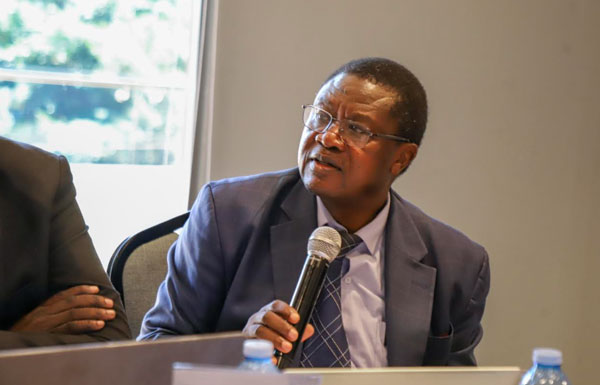

The missing gold problem
The forum’s most revealing exchange concerned the apparent mismatch between Uganda’s reported gold production and the much larger quantities of gold leaving the country. Mayende’s research identified serious weaknesses in mining data. Participants questioned whether official production figures represented gold actually mined inside Uganda or gold that had been imported, refined and subsequently exported.
The records, the discussion suggested, are not sufficiently clear. Edwin Kanakulya Kavuma, the Manager of Stakeholder Engagement at the Uganda Extractives Industries Transparency Initiative (UGEITI), offered one explanation for the discrepancy. Many artisanal miners, he said, insist that much of the gold leaving Uganda is actually produced domestically. The problem is that these miners have historically operated outside the formal system.
Gold can move from miners to buyers and refineries and eventually appear in export statistics without the production being captured at the mine site by the Directorate of Geological Survey and Mines. Kanakulya therefore posed a question with major implications for the tax debate: “Now with this formalisation and licences, are we going to see a shift in the production figures?”
If formalisation produces better production data, Kanakulya said, Uganda may begin to understand whether its apparent gold-export boom is primarily the result of domestic production, imported gold being refined locally, or a combination of both.
Paul Twebaze, a Research Fellow at the Advocates Coalition for Development and Environment (ACODE), a Kampala-based public policy thinktank, also focused on the discrepancy. He recalled posing a question at a similar forum why Uganda exports more gold than it produces. But in a rejoinder, ex-commissioner Baguma said imported gold can legitimately be refined in Uganda and re-exported.
The problem, Twebaze argued, is knowing where the boundary lies between legitimate international trade and weaknesses in domestic production monitoring. “It means we are not in control of the leakages,” he said. Without reliable traceability, government cannot confidently establish how much gold is mined domestically, where it originates, who owns it, who processes it and who exports it. And without that information, even a well-designed royalty regime can be undermined.
The US$200 question
Kanakulya nevertheless returned the discussion to the fiscal regime. “Gold does not pay royalties, it only pays US$200 per kilo on the export of refined gold to 99%,” he said. He questioned whether that payment represents a meaningful public return when compared with the international value of gold.
“If you’re to search online and find out how much a kilo of gold is going for on the international market and you compare to the US$200 that these people are paying,” he said, “really it becomes, US$ 0.00000, so many zeros before you reach a figure.” The argument is politically potent because it puts a huge export figure against what participants regard as a relatively small public return. But it also exposes the complexity of the issue.
A government can change the fiscal regime, but if it cannot reliably measure production or distinguish domestic output from imported gold, it risks taxing the wrong part of the chain; or failing to collect what is actually due. That is why several participants argued that the royalty question and the traceability question must be tackled together. How much are Uganda’s incentives costing?
Hilda Tumuhe, the Programme Officer for Debt and Aid at SEATINI, pushed the debate into the language of public finance. Her concern was not simply whether Uganda should tax gold; it was whether the country had adequately demonstrated that the revenue it sacrifices through tax incentives produces equivalent or greater economic benefits.
She pointed to the reported decline in the number of refineries, from around 10 to three, and questioned whether incentives remain justified on the same basis. “That’s why we are saying can we have a cost benefit analysis to ensure that we actually analyse and see what is the cost benefit ratio, how much are we losing versus how much are we gaining,” she said. That may be one of the most practical ways out of the political argument.
Instead of debating incentives as a matter of ideology, government could ask a measurable question: for every shilling of revenue forgone, what has Uganda gained in investment, employment, infrastructure, technology transfer and domestic value addition? The lead researcher, Mayende, similarly acknowledged that mining incentives can have a legitimate purpose.
Mining is capital-intensive, and attractive fiscal conditions can encourage investment, jobs and technology transfer. But incentives also have a cost. His study examined deductions, VAT and customs exemptions, depreciation allowances, loss carry-forwards and tax holidays and found that determining the full value of some revenue forgone remains difficult.
“That is a very big loophole,” Mayende said, arguing that government needs stronger systems for calculating how much revenue is being lost through mining-sector exemptions. The question is therefore not necessarily whether Uganda should abolish incentives, but whether each incentive continues to deliver sufficient public value.
The informal miner cannot be ignored
Julius Mukunda, the Executive Director of the Civil Society Budget Advocacy Group, shifted attention from large investors to the thousands of small-scale miners who operate outside the formal economy. He challenged the assumption that informality is simply a matter of miners refusing to comply with government.
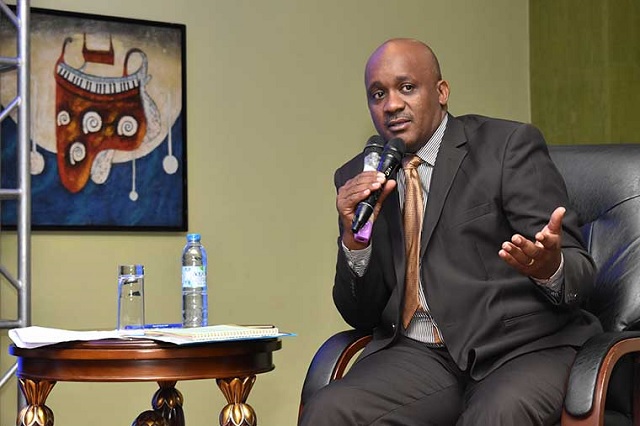
For a small miner, formalisation can involve registration costs, licensing requirements, environmental obligations and other expenses. “Why should I formalize? What are the benefits?” Mukunda asked. His answer was that government must make formalisation economically worthwhile.
He pointed to Tanzania, where government buys gold and provides miners with a market and price, giving small-scale producers a predictable outlet. “If we don’t do that, then we leave the sector for the winner takes it all, survival for the fittest,” he said.
Oxfam’s Energy and Extractives Coordinator, Siragi Magara, also identified access to finance as a major obstacle for artisanal miners. Formalisation without financing, technology and markets, he warned, may simply drive miners further outside the system.
The communities waiting for a return
The final dimension of the gold debate is perhaps the most politically sensitive: who benefits when minerals are extracted? Odokorach argued that mining communities often do not see mineral wealth translating into tangible improvements in their lives, despite bearing many of the environmental, social and economic costs of extraction.
Magara made the argument more forcefully, noting that Uganda could increasingly appear gold-rich in export statistics without becoming correspondingly wealthy in the lives of ordinary citizens. “How you destroy the environment, you destroy everything, their social things, and you cannot want to pay anything in return,” he said.
For Oxfam, the royalty debate is therefore also an inequality question. If mineral wealth is extracted from particular communities, those communities should see some tangible public return. But the forum also acknowledged that simply collecting more royalties does not guarantee better outcomes.
Magara said there were already weaknesses in accountability around royalties received by districts, including uncertainty over how the money should be used. That creates a second challenge for government. It must not only collect more mineral revenue. It must demonstrate where the money goes.
The contract transparency question
Transparency also emerged as another thread running through the discussion. Civil society representatives argued that citizens cannot properly assess whether Uganda is getting a fair deal from major mining investments if the agreements governing those investments are not accessible.
Magara cited the Wagagai Mining Company in eastern Uganda as an example, saying civil society knows the company is a major gold player but does not know the terms of its agreement with the government. “If we are holding government accountable and we don’t know anything in the contract, then we don’t know where to start from,” he said.
There is a counterargument: disclosing commercial terms could potentially give competing investors information that could affect negotiations. But civil society representatives argued that Uganda’s commitment to the Extractive Industries Transparency Initiative (EITI) makes openness an essential part of managing the sector. “You cannot be transparent and opaque at the same time,” one participant said.
The issue feeds directly into the tax-incentive debate. If government says incentives are necessary to attract investment, the public needs enough information about the obligations attached to those investments to judge whether the incentives are working.
A political decision meets a fiscal problem
There is also a political dimension to the gold royalty debate. Participants repeatedly described the zero-rating decision as originating from a presidential directive. That means changing the policy may require more than a technical adjustment to tax administration.
Representatives of tax justice campaigner, the Tax Justice Alliance Uganda, said it had already included the issue in its alternative tax proposals and submitted them to the Ministry of Finance, but had yet to secure an audience with the President.
Baguma proposed a more direct route: prepare a written case to the Ministry of Energy and Mineral Development and copy-in the Stae House, explaining what Uganda is losing in gold export revnues and why the policy should now change . Sophie Nampewo, Oxfam’s Finance for Development Coordinator, reinforced the idea, saying stakeholders could formally write to the President “on behalf of the communities.” “Doing nothing is not an option in this case,” she said.
So, what replaces the waiver?
The forum,however, did not settle the precise fiscal formula Uganda should adopt if the special treatment of gold is changed. Should government restore a blanket royalty? Introduce a lower rate? Use a sliding scale? Tie taxation to production or profitability? Should large-scale producers face a different regime from artisanal miners?
Those questions remain open. And perhaps that is where the next stage of the debate should begin. SEATINI’s Jane Nalunga called for the taxation framework to be re-evaluated. Her colleague, Hilda Tumuhe called for a cost-benefit analysis. UGEITI’s Edwin Kanakulya argued for a stronger fiscal regime. Dr. Kwatampora said he would raise the matter within the national mining company. Ex-mining commissioner, Baguma, called for the zero-rating decision to be withdrawn. Oxfam called on the President to reconsider it.
Taken together, the positions suggest that the debate is moving beyond the simple question of whether Uganda should tax gold. The more difficult question is: what is the appropriate fiscal bargain now that the industry has matured?
.