The Independent Uganda: You get the Truth we Pay the Price


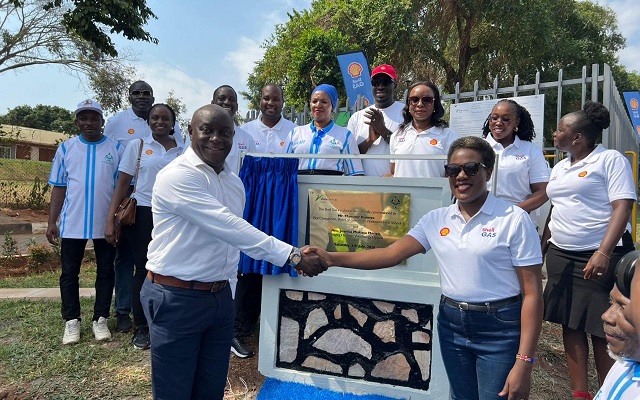
Kampala, Uganda | THE INDEPENDENT | Nabisunsa Girls’ School has become the latest educational institution to replace firewood with liquefied petroleum gas (LPG), reflecting a growing shift by Ugandan schools towards cleaner cooking technologies amid efforts to reduce deforestation, improve air quality and enhance kitchen safety.
The transition follows the installation of a Shell Gas bulk storage and distribution system by Vivo Energy Uganda, which has been rolling out similar projects in schools across the country as demand grows for institutional clean cooking solutions.
The installation at Nabisunsa includes a high-capacity LPG storage tank, a gas distribution network, pressure- regulation equipment, gas leak detection systems, emergency shut-off mechanisms and fire protection equipment.
According to Vivo Energy Uganda, the system was tested before commissioning, while kitchen staff received training on safe handling and emergency response.
The project adds Nabisunsa to a growing list of schools that have adopted LPG for institutional cooking, including King’s College Budo, St Peter's College Bombo Kalule, Kibuli Secondary School, Kiira College Butiki and Lubiri Secondary School.
The expansion comes as Uganda seeks to reduce its heavy dependence on biomass fuels. Firewood and charcoal remain the dominant cooking fuels in households and institutions, contributing to deforestation and indoor air pollution, while clean cooking has emerged as a key priority under the country's energy and climate commitments.
Speaking during the launch, Vivo Energy Uganda Managing Director Joanita Mukasa Menya said the company sees schools as critical entry points for accelerating the transition to cleaner energy.
“True sustainable development begins with practical solutions where they matter the most. By partnering with historic institutions like Nabisunsa Girls’ School, Vivo Energy Uganda is driving a critical shift away from traditional firewood and charcoal toward cleaner, modern energy”.
“Transitioning to Shell Gas isn’t just an operational upgrade; it’s a direct commitment to protecting our environment, safeguarding the health of our students and kitchen staff from harmful emissions, and fostering safer, healthier learning environments across Uganda.”
The company says LPG enables schools to reduce cooking time, improve kitchen hygiene and safety, lower maintenance requirements and eliminate exposure to smoke associated with biomass fuels.
Vivo Energy Uganda LPG Manager Alvin Bamutire said the company intends to expand the programme beyond its current beneficiaries.
“From an operational standpoint, this Shell Gas installation proves that high-volume institutional cooking can be safe, seamless, and cost-effective. But Nabisunsa Girls’ School is just the beginning. We are on a dedicated drive to roll out this bulk gas technology to schools across the country, replacing outdated, inefficient infrastructure with modern energy systems”.
“ By scaling this initiative nationwide, we are actively championing clean energy transition at the grassroots level, which is a key milestone in our quest to become the leading and most respected energy business in Uganda.” Nabisunsa Girls’ School Headmistress Hajjati Janat Kakumba Namujuzi said the transition would improve both the school’s operations and the welfare of its community.
“This investment marks an important milestone for our school. The Shell Gas installation will improve efficiency in our kitchen operations, support a cleaner environment, and provide a safer and healthier cooking solution for our school community.”
“This partnership with Vivo Energy Uganda has set a new standard for what a modern, sustainable educational environment looks like in Uganda and ultimately lifts a massive operational burden off our shoulders, allowing us to focus our energy into what matters most, that is nourishing and educating the next generation”, she added.