The Independent Uganda: You get the Truth we Pay the Price



20 years after the discovery announcement, ‘Pearl Sweet’ marks the moment Uganda’s crude moves from political promise to commercial test
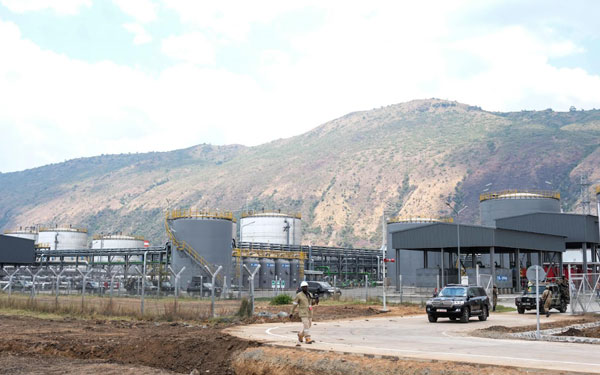
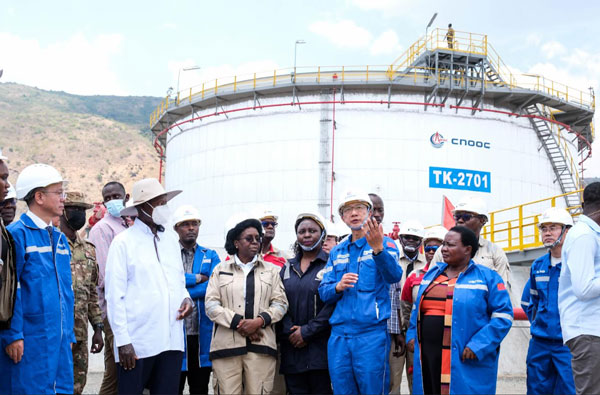
Kampala, Uganda | RONALD MUSOKE | After almost 20 years of waiting, Uganda has finally given its oil a name. President Yoweri Kaguta Museveni unveiled the name “Pearl Sweet” on Sept.2, 2026 during a visit to the Kingfisher Oil Development Area in Kikuube District.
The name comes nearly two decades after Uganda announced the discovery of commercially viable oil in the Albertine Graben, marking another step towards the country’s long-awaited entry into the ranks of oil-producing nations.
But the significance of the name goes beyond the ceremony where it was unveiled. For Uganda, this is the moment when crude oil begins to move from being a national promise, an infrastructure project and a subject of political debate into something much more unforgiving: a commodity that has to find buyers, compete with other grades and deliver value.
The announcement came just weeks short of two decades since Oct. 8, 2006, when Museveni told a national thanksgiving and prayer gathering that commercially viable petroleum had been discovered in western Uganda. That announcement was supposed to open the door to production by 2009.
Instead, Uganda spent the next two decades negotiating contracts, building institutions, developing oilfields, acquiring land, debating the viability of an in-country refinery, planning an export route and constructing the infrastructure needed to move crude from the Albertine hinterland to the Indian Ocean.
Now, with the first oil approaching, the country’s question has changed. It is no longer simply: Does Uganda have oil? It is: What can Uganda get from the oil it has? And perhaps even more importantly; can it turn a finite resource into lasting economic value before the barrels run out?
From discovery to a trading grade
The name “Pearl Sweet” was not chosen merely as a branding exercise. According to the Uganda National Oil Company (UNOC), the crude from the TotalEnergies-operated Tilenga Development Area and CNOOC Uganda Limited’s Kingfisher Development Area will be processed and co-mingled at the Kabaale Shared Facilities in Hoima before being transported through the 1,443-kilometre East African Crude Oil Pipeline (EACOP) to Tanzania’s Tanga port.
That means the name is intended to give Uganda’s crude an identity in the international marketplace. International crude is not simply sold as “oil from Uganda.” Different grades are identified by characteristics such as sulphur content, density and yield. Those characteristics matter to refiners because they influence how easily crude can be processed and what products can ultimately be produced.
That is where the second half of Uganda’s new name comes in. “Sweet” is a petroleum term referring to crude with relatively low sulphur content. “Pearl”, meanwhile, connects the product to Uganda’s long-established international identity as the “Pearl of Africa”.
Dr Monica Musenero Masanza, Uganda’s Minister of Energy and Mineral Development, described the name as a combination of the country’s identity and the physical characteristics of its crude. “Sweet” refers to the crude’s very low sulphur content, she said, while “Pearl” reflects Uganda’s identity as the Pearl of Africa.
“For many years, petroleum in Uganda was an aspiration; something discovered, studied, debated and planned for,” Dr. Musenero said. “Today, that resource is being translated into productive assets, infrastructure, skills, businesses and, very soon, commercial production.” Dr. Musenero’s sentiment perhaps captures the broader significance of the naming ceremony better than the ceremony itself.
Uganda has spent years preparing to become an oil producer. It is now preparing to become an oil seller. Proscovia Nabbanja, the Chief Executive Officer of UNOC, put the commercial significance more directly. “Pearl Sweet gives Uganda’s crude what every traded grade needs: a clear identity, a defined quality and a name the market can recognise,” she said.
“The Pearl speaks to Uganda. The Sweet tells refiners something important about the crude itself.” For UNOC, she said, the naming opens “the next phase”: taking Uganda’s barrels to market, building long-term relationships with refiners and traders and capturing maximum value for the country. That is the part of the story that begins now.
The market is the real test
Giving the crude a name does not guarantee that buyers will pay a premium for it. Nor does it, by itself, answer the commercial questions surrounding Uganda’s oil. The country must still establish how Pearl Sweet will be received by refiners, how it will be priced against competing crude grades and which buyers will be prepared to take regular cargoes.
The government and its international oil company partners have spent years constructing the physical infrastructure to the market. The 1,443-kilometre EACOP is the critical link. Without it, Uganda’s oil would remain stranded far from a seaport. With it, the country gains a route to the Tanzanian coast and international crude markets.
Don Bwesigye Binyina, the Executive Director of the Kampala-based non-profit, the African Centre for Mineral and Energy Policy, argues that this international dimension is central to understanding the new name. He says the name gives Uganda’s crude a distinct identity by communicating both its origin and quality. The government, he argues, is telling the international market that Uganda has a product to sell and that buyers can identify what they are purchasing. “Sweet” tells a buyer something about sulphur content and the products that can be extracted from the crude.
But Binyina also makes a broader point about how Ugandans should think about the resource. “What nationalist Ugandans need to know is that Uganda’s crude oil is an international resource, not a local resource,” he told The Independent, in reference to the social media debate that ensued following the unveiling of the Uganda’s crude oil name.
For him, the EACOP is not merely a pipeline project. It is the physical expression of the fact that Uganda’s crude ultimately has to enter an international market. “This is the essence of the East African Crude Oil Pipeline which is being constructed from Hoima to the Tanzanian port of Tanga,” he says.
The distinction matters. For nearly 20 years, Uganda’s oil debate has largely been domestic: how much oil is underground, who owns it, how much money the government will earn, where the refinery should be built, how communities should benefit and what environmental risks the industry poses.
The next phase introduces another set of actors. Refiners will care about the crude’s properties. Traders will care about supply, demand and price. Shipping companies will care about reliable cargoes. Financial institutions will care about commercial risk. And Uganda will have to prove that it can deliver consistent volumes and quality. The country’s crude will have a name. The market will decide what that name is worth.
A name that is both national and deliberately neutral
There is another interesting question hidden inside Pearl Sweet. Why “Pearl”? And why not a distinctly Ugandan indigenous name tied to the region where the oil was discovered? For some Ugandans, the choice may feel underwhelming. A resource that has been politically framed as a national patrimony might seem to deserve a name drawn from one of the country’s languages, cultures or landscapes.
Instead, the government settled on a name that can travel easily beyond Uganda’s borders. On the surface, “Pearl Sweet” is simple. But its simplicity may be deliberate. Onesmus Mugyenyi, the Deputy Executive Director of the Advocates Coalition for Development and Environment (ACODE), a Kampala-based thinktank, believes a neutral name was the safer choice.
“It was the correct choice because if you give it local names, especially the names that are associated with places, then you may have difficulty, actually, when you discover oil in other regions of the country,” he told The Independent.
“Therefore, finding a neutral name, to me, is okay.” The choice of “Pearl,” however, is not free from history. Mugyenyi acknowledges that the phrase “Pearl of Africa” has a colonial association. The expression is famously associated with former British Prime Minister, Winston Churchill, who used it to describe Uganda after his travels in the country. Yet Mugyenyi argues that the phrase has become embedded in the way Uganda presents itself to the outside world.
“Even if it has colonial connotations, we’ve used it to sell the country for many years,” he says. “So, it resonates with what we’ve been trying to promote: Uganda, the Pearl of Africa.” That makes Pearl Sweet less of a completely new brand than an extension of an existing national one. And there is a practical argument behind it. “The Pearl is associated with Uganda,” Mugyenyi says. “So, if you have a product and you name it that (Pearl), it captures the international community much easier.”
But there is also a political consideration. Uganda’s oil story is rooted in the Albertine region, but the crude itself is being presented as a national resource. Giving it the name of a particular locality or ethnic community could potentially create questions over ownership and identity. Mugyenyi told The Independent that Uganda’s existing social divisions make neutrality useful. “Because the country is already divided along sectarian lines, therefore, if you look for a name that tends to a certain ethnic group, it may not receive a good reception,” he says.
For a product that Uganda hopes to sell internationally, a nationally recognizable but geographically neutral name may therefore have been the more practical choice. The irony is that the name is simultaneously deeply Ugandan and deliberately non-local.
20 years of waiting
The significance of Sept. 2 cannot really be understood without returning to Oct. 8, 2006. That Sunday, at a national thanksgiving and prayer ceremony, Museveni announced that petroleum engineers had confirmed commercially viable oil reserves in western Uganda. The announcement followed years of exploration and successful drilling in the Albertine Graben.
At the time, the numbers were modest compared with today’s estimates. Energy Ministry officials put the reserves in three fields at between 100 million and 300 million barrels, with about 30 million barrels described as ready for extraction. The political ambition, however, was enormous. Museveni said Uganda intended to have a local refinery.
He projected production beginning in 2009, initially at between 6,000 and 10,000 barrels per day, to meet domestic demand and support electricity generation. The vision was not simply to pump crude out of the ground. It was to use oil to change Uganda’s economic trajectory
But the route has proved far more complicated than the early projections suggested. Infrastructure requirements grew. Tax and contractual negotiations took time. The scale of the discoveries expanded. The country had to work out how a landlocked oil producer would reach the international market. The refinery debate became one of the defining issues in the sector. And the EACOP became the physical backbone of the export strategy. What was initially imagined as a relatively quick journey from discovery to production became a generational project.
The difference between the 2006 expectations and today’s reality is therefore not merely a story of delay. It is also a story of scale. Uganda’s Lake Albert Integrated Development is now built around an estimated 1.65 billion barrels of recoverable oil resources. Tilenga is designed for peak production of about 190,000 barrels per day, while Kingfisher is designed for about 40,000 barrels per day. Together, the projects are expected to reach roughly 230,000 barrels per day at peak production.
More than US$12 billion of an estimated US$15 billion investment programme has already been spent across Tilenga, Kingfisher and EACOP, according to UNOC. The physical infrastructure is therefore not a small experiment. It is one of the largest industrial investments in Uganda’s history. And that makes the commercial phase particularly consequential.
The crude itself is not as simple as the name
Pearl Sweet may sound straightforward, but the physical characteristics of Uganda’s crude introduce another layer of complexity. Officials describe it as low in sulphur, a quality that can make crude attractive to refiners. UNOC’s technical description puts the blend in the medium-light range, with an API gravity of approximately 28oC to 31oC.
But the crude also has a property that makes getting it to market more complicated: it is waxy. At normal temperatures, the crude can solidify. That means it cannot simply be pumped through a conventional pipeline and left to travel. It has to be kept hot. The EACOP therefore has been designed as a heated pipeline running from Kabaale to Tanga.
Eng. Pauline Irene Batebe, the Permanent Secretary in the Ministry of Energy and Mineral Development, said the Kingfisher project was about 80% complete when the naming ceremony took place, with first-oil readiness at 98% and commissioning tests underway. “First oil was expected by the end of September,” she said.
But Batebe also highlighted the unusual characteristics of the crude. “The crude produced at Kingfisher is waxy and low in sulphur and solidifies at normal temperatures, requiring it to be kept hot during transportation.” The pipeline, she said, would be heated along its entire 1,443-kilometre length. At the time, EACOP was reported to be 92.7 % complete. This is one reason the commercial story cannot be separated from the infrastructure story. Uganda may have crude that refiners find attractive because of its sulphur characteristics, but getting that crude reliably from the oilfields to the coast requires a technically demanding system. The cost of that system will ultimately form part of the economics of the oil.
Exporting the crude while talking about refining it
But there also remains another important tension in Uganda’s oil strategy. The government is preparing to export crude through Tanzania while simultaneously insisting that refining at home should remain a priority. Museveni repeated that position at the Pearl Sweet naming ceremony. “Our refinery will be one of the most profitable because, first of all, it’s far from the ocean and it does not have the transportation cost which imported oil has,” he said.
“When we refine our oil here, you don’t pay transit charges.” He put the cost of transporting crude to Tanga at US$12.77 per barrel and argued that Uganda could save substantially by refining domestically. “When we pump our crude to Tanga, we pay US$12.77 per barrel just for transport,” he said. “We shall no longer spend $2 billion importing petroleum.”
That final figure is a presidential claim and, like any major economic projection, deserves scrutiny against independently verified import and refinery economics. But the political message is unmistakable. Uganda does not want the oil story to end at the export terminal. “You can export some of the crude, but the refinery must get priority,” Museveni said. “That is what is in our agreement.”
The government therefore sees the crude as both an export commodity and a potential feedstock for domestic industrialisation. That distinction will, perhaps, become increasingly important as production begins. If Uganda simply exports crude, it earns from production and its participating interests, taxes, royalties and other associated revenues.
If it can build competitive downstream industries, the economic chain could potentially become longer. But longer value chains also require capital, skills, infrastructure, reliable energy, markets and sound management. Oil does not automatically produce industrialisation. It creates the possibility of financing it.
The real argument is what happens to the money
That brings the story back to the question that has followed Uganda’s oil industry since 2006. What will the country do with the revenue? Museveni used the naming ceremony to repeat a warning he has made over the years: oil money should not become a source of consumption and luxury imports.
“The money will be used to do durable things — to build power stations, build the railway and other things which will be there for the grandchildren,” he said. Museveni’s language is important.
Uganda’s oil is finite. Once extracted and sold, the resource cannot be replaced. The test of the industry, therefore, cannot simply be how much crude is produced or how much money enters government accounts. It has to include what remains after the oil is gone.
Lynda Biribonwa, the Chairperson of the Board of the Petroleum Authority of Uganda (PAU), framed that challenge in terms of what petroleum should leave behind. “As Uganda prepares to enter the era of oil production, our collective responsibility is to continue converting petroleum resources into skills, enterprises, infrastructure, technology, industrialisation, energy security, and shared prosperity,” she said.
That is perhaps the most important measure of whether the 20-year oil journey ultimately succeeds. The sector has already created jobs and training opportunities. UNOC says that by March 2026, total employment in the oil and gas sector stood at 22,234, with 85% of those workers being Ugandan nationals. More than 14,000 Ugandans had been trained and certified in oil and gas disciplines.
Those are tangible outputs. So are the roads, airport, industrial facilities and other infrastructure officials associate with the oil development programme in the Albertine region. But the larger economic test has not yet begun. It will begin when revenues start flowing.
An oil industry entering a changing world
There is another reason the timing matters. Uganda is entering the international oil market at a time when the global energy system is changing. Crude oil remains essential to transport, industry and petrochemicals, but governments, companies and consumers are also accelerating investment in alternatives, electrification and cleaner energy.
Mugyenyi argues that Uganda should not view oil as an end in itself. Instead, the revenues should help finance a transition. “If we really try to make sure that we exploit it in a manner that does not compromise the environment,” he says, “and as the Energy Transition Plan says, we use the revenue that is generated to transit to clean energy, I think it’s a positive.”
That may ultimately be one of the central contradictions of Uganda’s oil story. The country has spent two decades trying to become an oil producer just as the global economy is beginning to think seriously about what comes after oil. That makes the question of timing almost as important as the question of volume. Uganda cannot control the global energy transition.
But it can influence what it does with the revenues generated during the period when its crude has a market. From a political promise to a commercial proposition There is something almost symbolic about Uganda naming its crude at this particular point in the country’s oil journey.
In 2006, the country had a discovery but no commercial oil industry. In 2026, it has developed fields, a central processing facility, a national oil company with a participating interest, an export pipeline and a crude grade that now has a name. But the name is not the destination. It is the beginning of another test. The government has spent years asking Ugandans to be patient as the physical foundations of the industry were built. Now the industry has to demonstrate that those foundations can produce value.
For UNOC, that means marketing barrels and negotiating with refiners and traders. For the Ministry of Energy and Mineral Development, it means moving from construction and commissioning into production and regulation. For the private operators, it means delivering the production levels on which the economics of the projects depend. For the government, it means converting petroleum revenues into the productive assets that Museveni says should outlive the oil itself. And for Ugandans, it means judging the industry by something more meaningful than the spectacle of first oil.
Pearl Sweet may soon appear on cargo documents, refinery specifications and trading systems around the world. But its ultimate success will not be measured by how recognizable the name becomes. It will be measured by the value Uganda captures from the barrels, the industries that emerge around them, the infrastructure and skills that remain after production declines, and whether the country can avoid the familiar fate of resource-rich economies whose oil wealth became a short-lived boom rather than a foundation for lasting development.